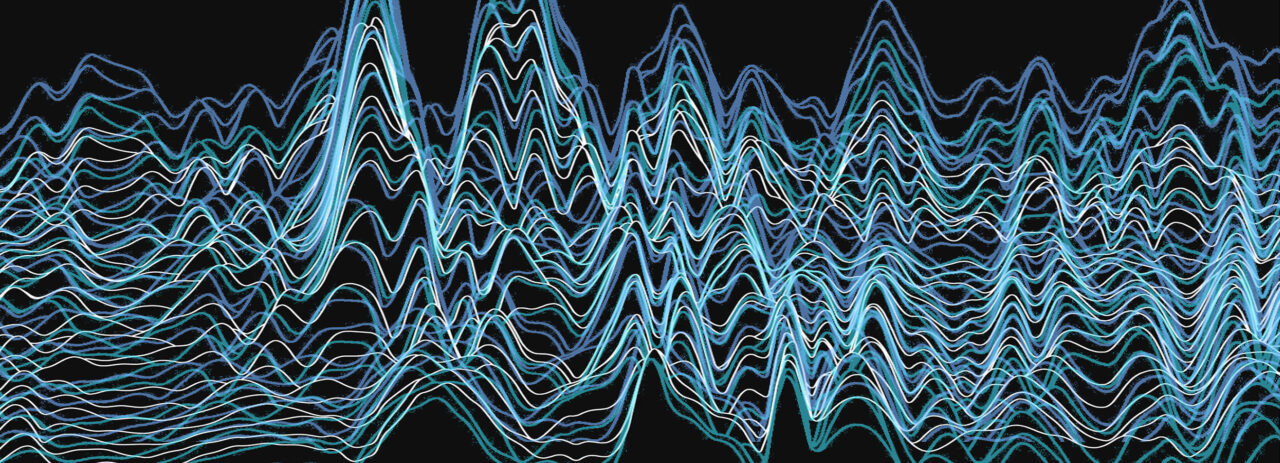
This work explores the perceptual boundary between acoustic sampling and electronic synthesis. I use spectral, temporal, and spatial blending to mask the difference between these two, highlighting timbral transformation. Kontakt’s Stradivari violin and SWAM’s C Trumpet, are acoustic reference points that gradually transform into textures from wavetable synthesizers like Serum 2. The composition open with violin harmonics, gradually changing through motivic repetition. Synthesized materials model this pure tone with beating patterns and LFOs to shift from a purely acoustic sound. Phase modulation enhances the beating sound using send-based tracks. This transforms at a striking moment when the harmonics suddenly alternate into arco in unison with the trumpet. This is the first unison of multiple tracks and marks the beginning of the compositional buildup.
This buildup is structurally reinforced by sample usage. Ambient layers are used throughout the piece, but begin with significant reverb, some hall and some plate. These help fill the negative space with textural variety. As the piece progresses, the reverb is gradually recedes, revealing that they are granulated wind and siren with with slow, indistinct attacks. This new prominent texture makes a grand entrance alongside the arco shift, becoming central to the compositional process as the density is increased and grain size is shortened. The instruments recede as new sharper attacks occupy the entire frequency space, no longer just the highs. Subs are introduced for the first time and are derived from saws in order to fill the low end.
Following the climax, the piece begins to drop out each layer of texture and fragments over time by cutting tracks up into disparate pieces. The ambience’s reverb returns, the violin plays pizzicato, and the trumpet performs extremely short random notes before returning to the opening motif. This figure repeats, gradually slowing for a final sonic decay of the work.